Before Queer Was Cool: Making LGBTQ Films Before the Digital Age of Selfies
“Keep making art no matter what, no matter how old you are, whether you’re a kid, whether you’re in school, whether you left school, whether you work a full-time job, to keep art alive.”
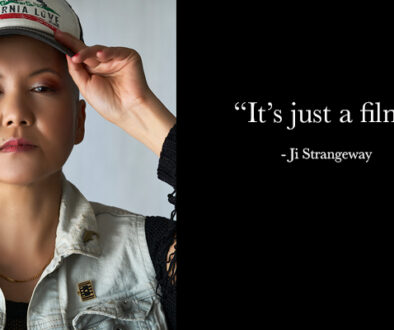
Before being gay was okay, my best friend Jack and I were the only openly LGBTQ film students at our school. This spoken journal is about the “early days” of filmmaking before the digital and the discipline of cutting film by hand. I also discuss the importance of pure artistic collaboration, creativity, the special bond of finding my artistic twin and how we invented “Selfies” before it became a thing. Art Saves Lives, and I hope these stories inspire others to keep making art.
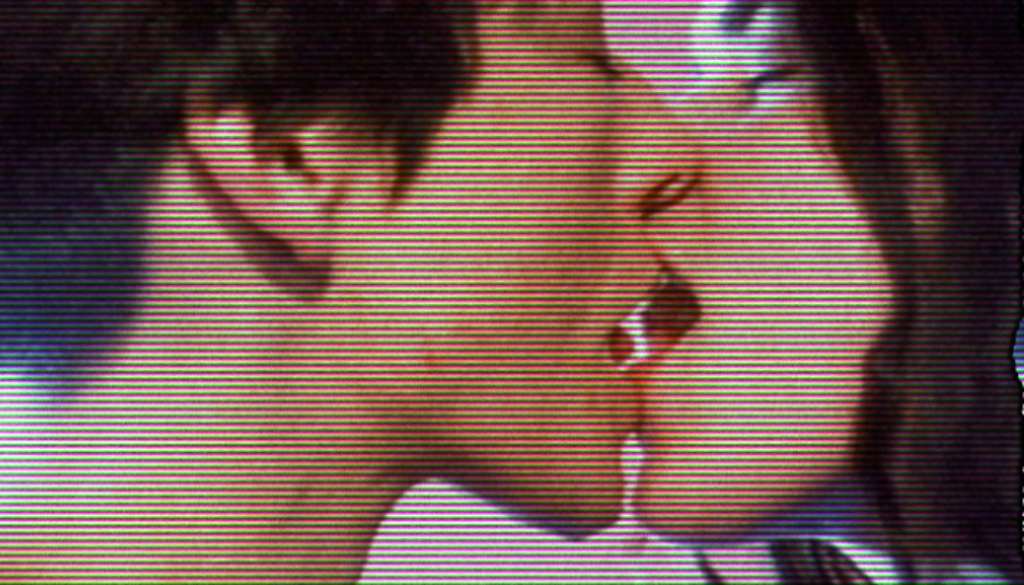
Check out the companion short documentary video called: BEFORE QUEER WAS COOL
XOX
Ji
Before Queer Was Cool - Commentary
“It’s really about artists operating as a release valve for society and their taboos and their hang-ups and stuff. The artist needs to release that for society in order to restore any kind of sanity, really, and to help people heal”
If you think video editing is difficult in terms of craft and technique, imagine a time where it really was difficult when it weighed 500 pounds and made of a ton of steel and it took two Russian guys to carry this big machine in parts up anywhere from one to four to six flights of stairs in a New York tenement building.
Film editing was difficult because you literally had to use an industrial machine called a Steenbeck or a Moviola. Today, they look like war machines, they’re made of steel. They’re enormously large, and you needed to have a lot of money also to own them. They are definitely film industry machinery.
I recently put together an experimental video of my best friend, Jack Pretzer, and I, in film school. We were truly indigo kids. We were wild. He was my artistic twin. And if you don’t know anything about artistic twins, they’re very special. They’re like your artistic soulmate. They know you inside out.
Jack and I were opposites. He was into horror and darkness and transgression films, and I was into love and spirituality. We were completely opposite. We shared one perversion and that perversion is actually not really a perversion, but society had made it one. Where we met in the middle was that we wanted to sexually liberate people.
Our films were all about human sexuality and expressing yourself. And he did it in the most, you know, perverse way that he could and in the most hysterical way. I did mine in a way of integrating the human body and sexual identity. I guess if people don’t really understand what human sexuality is about in terms of transgression films, as well as the work that I did and still do, it’s really about artists operating as a release valve for society and their taboos and their hang-ups and stuff.
The artist needs to release that for society in order to restore any kind of sanity, really, and to help people heal. It’s very difficult to get into judgment about what we do, because it isn’t about right or wrong. It isn’t about morals. It isn’t about perversion. Really. It’s about healing people.
OUR PERSONAL SELFIE MOVEMENT
“In so many ways we intuitively predicted selfies essentially.”
As kids, Jack and I were really ahead of our times. I don’t mean to say that arrogantly. We truly were because we were indigo kids, meaning we were on the pulse of the future. Jack and I were videotaping everything in our lives. And even before I had met. I was constantly doing self-portraiture with Polaroid cameras, 35mm cameras. And then eventually when video equipment became small enough and digital media became available. Actually, it was still analog. Yeah. Analog video cameras. Weren’t exactly digital. There were still tapes, magnetic tapes, but we were always documenting ourselves. Constantly. We documented when we ate out in restaurants, we document ourselves doing almost everything imaginable and people would give us really dirty looks in restaurants on the streets.
They would yell at us, and we would just keep taping. We would point the camera at ourselves when we would talk. And then we’d point it around us as well, without a viewfinder, by the way. And what that means is we had to develop the ability to know exactly where the camera lens was intuitively. Creating the correct composition.
We didn’t have any viewfinder the way you have with iPhones. When you take selfies and stuff, we didn’t have any ability to look at ourselves while we were recording. We kind of mastered composition without ever looking through the camera. Now, why is this so interesting? In so many ways we intuitively predicted selfies essentially.
And back then in the 1990s people really didn’t walk around, videoing everything. You know, we videoed ourselves, walking down the street on the subway everywhere. We were just hardcore into documenting stuff. And it’s funny now because all those people that used to give us dirty looks and used to yell at us literally are now creating selfies. Very interesting. Now we’re in the selfie culture when Jack and I were in the selfie culture, God, you know, ages ago.
FILM EDITING WEIGHED 500 POUNDS
“I was very lucky because I was there during that transition between the old and the new, the analog and the digital”
The story I really wanna talk about is creativity and also film editing. Film editing is really fascinating. In the past, in order to edit a movie, you use 16mm films. It was very tactile. You actually use your hands and there was something very healing and creative about using your hands to touch film, to handle film, to splice film, to tape it together. And the discipline it took. To keep track of all those pieces of film. We would have a film bin where you would hang your strips of film, like laundry, really.
The horror of that experience is that if you cut a few frames and it falls to the bottom of the bin, literally into a type of laundry bag, you’re kind of screwed. You literally lost your frames of film and you would hang the larger pieces on the film bin, and then you would use paper tape. You would tape the smaller films in a log book on paper. I know this sounds really grueling, but it’s a lot of work. You’d actually tape 2, 3, 4, 5 frames on a piece of paper and you would write next to it the time code or the closest you can get to the time code on that piece of paper.
Creating film on this level was sort of like a life and death situation because when you create film, every cut is thought out, right? You don’t have a luxury of just clicking away the way you do a computer. Now, every single cut mattered. You thought about it before you. Hit that butcher block and splice and make that physical cut on the physical film.
This took hours and hours and hours to do. It truly is like being an alchemist. Some people hate editing. Well, I love it. You have to love it. If you don’t love it, you just cannot do it. If you don’t love it, it’s pure torture. And I still love editing. I would lose myself in editing. I still do. It’s very easy for 20 hours to pass.
Before I realized that I have been editing, I used to live in the editing room at school. Now, mind you, these Steenbeck machines are enormous and took up a whole room, literally. Well, a whole small room, a small room being the size of a bathroom. Well, maybe larger than that. Because they were so expensive, enormous, there was only maybe six rooms in the film school.
I would be living in them, not because I had nowhere to sleep, but I loved editing that much. It took that much time to edit that I would just take naps on the floor, the disgusting floor. God knows what happens on those floors, but, you know, we were kids, so I’d sleep on the floor. I literally had a coffee machine that kept me going. It was coffee, house music and editing. Sometimes I’ve been there for like two, three days. Sometimes class would start in the morning and someone would walk by my door is open. They’re like good morning. And I’m like, oh, Hey, you know, I’ve been sitting here since the day before.
I was very fortunate to be going to film school at the time that I did, but not as fortunate as the kids today, but fortunate enough in the sense that I was right at the middle of things, turning from analog to digital. I was very fortunate to edit the way I did on a Steenbeck. The discipline that editing physical film does for you is indescribable.
It really separates the mice from the men, or whatever that expression is. It really made you very disciplined in your craft. I can’t speak for what I don’t know. I can only speak for what do. Which is, without that experience, I hardly think I’d be as good as an editor that I am today. And by this, I’m not really talking about like good creative editing with special effects and all that stuff, but good terms of really seeing the splice, really seeing the splices, you know, it’s a real craft to see that space between two things, connecting, never, ever really taking for granted how those things come together. And I was very lucky to go to film school. The time I did, I was unlucky in other ways. I was unlucky because there were not a lot of women entering the field.
And there weren’t a lot of opportunities either before the internet, but I was very lucky because I was there during that transition between the old and the new, the analog and the digital, I had just heard about the Avid digital editing system about the time that I left. That was the first editing system that was used professionally in the film industry.
And no one could afford it, not like today where you can go online and pay anywhere from 50 bucks to a couple hundred for an editing software. No, the Avid editing system literally was $30,000. It cost as much as a car. Obviously, none of us used that at school. Our school was not well funded. It was the beginning of a new technology.
Adobe Premiere software came out and my God, that was extremely buggy. After I graduated college, I did some assistant work for video editors and they were using Premiere, but it was a nightmare. It was just, this stuff was just not fully developed yet, but the point is how awesome it is to see, to be there at a time of innovation and change to where you’ve developed all this discipline. It was the hard way, yes, but having the foundation to use digital editing equipment and software. You just felt grateful because you know how hard it was to just physically edit a movie.
“Often they were these big Russian guys. Neil would charge you $20 per flight and they would deliver the machine in a van in pieces, haul them up the stairs and put them together for you. That was video editing.”
I’d like to tell a funny story about a company called M.P.E. (Motion Picture Enterprises). There was a guy. I don’t know if he was the son of the owners or he was the owners of M.P.E., but they had this big warehouse. I don’t know how many levels it was in Manhattan. They rented and sold 16mm 35mm Steenbeck and Moviola flatbeds.
That was a very interesting experience. His name was Neil about once a week, he’d come to our school. He’d drive all the way to upstate New York in a van. And every time he came, it was like the ice cream man coming down the block. Stocked with split reels, splicing, tape, grease pencils, grease pencil gloves, leaders, which are these rolls of useless film that you use in the front and the back of your film or to fill gaps. Magnetic tape, you name it, splicing, blocks all of it. And he would come and he’d just make a bundle of money off of us. And it was great because we wouldn’t have to go to Manhattan to buy our supplies. I remember going down to Manhattan, to his warehouse a few times, and that was a sight to behold.
They had this gigantic freight elevator where an old black man would sit on a stool inside all day long. And all he did was operate this vintage, enormously, large elevator with the gate and everything. He was the full-time operator of that elevator. And he lived in the elevator. It was just wild.
I wish I brought a video camera. To videotape that because it’s just like nothing I’ve seen before. The guy literally lived inside the elevator. He had music on, he had posters and pictures and things plastered all over the walls. He was comfortable. He had this amazing personality where during that few seconds that you’re in the freight elevator, you just have these delightful conversations. It was like being in his living room and that was really the trippiest thing I’ve ever experienced, in an elevator anyway. And then when you get out of the elevator, it was like being in a garage, but instead of cars parked everywhere, you had these gigantic, enormous monster workhorses, or what I call the war machines. They look like war machines. They’re made of steel. That’s all, there was Moviolas and Steenbecks.
Neil was a very good business person. He knew how to give us just the right amount of discounts to keep us loyal. He not only sold Steenbecks and Moviolas, but he also rented them. And when he rented them, he had his own crew. Often they were these big Russian guys. Neil would charge you $20 per flight and they would deliver the machine in a van in pieces, haul them up the stairs and put them together for you. That was video editing.
MEETING MY ARTISTIC TWIN
“I always wore a motorcycle jacket and boots, and often carrying my helmet around. I put off this very tough vibe. It became a source of fascination, I guess, for him.”
I met Jack when he was only 17 years old. Incredibly creative. Jack and I lived in the dream world. We were always dreaming. We’re always creating. There was not one moment when we were not creating. We would spend so much time together talking about life and art philosophy. I talked about dreams. I taught him how to analyze dreams.
I taught him process how process is very important and he taught me about Gore Vidal and gay filmmakers, gay writers that he liked. We would always be writing. We’d always be talking about the process. We were always bouncing ideas off each other. We were yin and yang. He was dark. I was light and I made him light and he made me dark and we just flowed.
I have to say that one thing that I’ve learned in life is that when you meet your artistic twin, cultivate it, because it’s rare, it’s something that doesn’t come into life for all people. When it comes, you want to honor it. It’s extremely special. Jack and I really didn’t know how special our creative synergy was. We really didn’t. We literally complimented each almost telepathically and sort of finished each other’s creative ideas in ways that was synergistic, that we didn’t even need to talk about stuff. We didn’t need to explain anything about what we do. We just got it. We had similar creative visions in terms of composition. When I filmed his stuff or when he filmed my stuff, we didn’t really need to get into a discussion about composition. We just knew what each other wanted. And when we worked creatively that long, that intensely together, it’s very easy to just put stuff together.
I don’t really remember how Jack and I started collaborating. We weren’t in the same grades and we also weren’t in the same classes. We might have been in acting classes together. As filmmakers, we were required to take acting classes, which I really hated. I love directing and love actors, but I don’t like acting . He saw me around the acting conservatory. I remember him telling me he was afraid to talk to me because he found me very intimidating. I was this tough girl with this tough edge of exterior, of don’t fuck with me. I was riding a Ninja sports bike as a means of transportation. I always wore a motorcycle jacket and boots, and often carrying my helmet around. I put off this very tough vibe. It became a source of fascination, I guess, for him. Finally, he worked up the courage to talk to me and we just ended up clicking.
We naturally started creating together and became good friends. I had been a club kid for a very long time in my life. I’ve been going to clubs since I was 15. I literally consider nightclubs my second home. Jack was only 17 years old. He was underage and, but he looked like a man. He looked 30 and he was a big guy too. I would introduce him to the club life. We would take the Metro north from SUNY Purchase down to Manhattan through the subway stations. And I was in nightclubs three times a week, even though I was living away from New York City.
That’s what’s great about having a motorcycle. I can go clubbing, ride home at four in the morning. It was beautiful. How quiet the night is with no one around. Just the cool wind going through your body. Very peaceful. Anyway. Yeah. I started taking him to the underground clubs, the gay clubs. He loved it.
That was how Jack got into house music. Before that he was into more alternative music, like the Smashing Pumpkins. And I don’t know what else was there in the nineties? I have not listened to the radio forever. I never listened to the radio. I always got my music from the nightclubs and that was when he and I started partying together and we just taught each other a lot.
BEFORE QUEER WAS COOL
“Being gay and being lesbian was not a very cool thing. Not the way it is today. Today, you know, even your bank has gay pride. That was not the case back then.”
We had so much to exchange and share, and to open each other up to new things that were intellectually and creatively stimulating. And it was around that clubbing time that Jack came out to me and it was a very natural process. The way my life has been is usually people who become friends with me usually come out to me. It just becomes a very natural thing for them. It’s not even like they’re coming out to me, you know, they just hang out with me, I’m gay and then they just tell me.
Being gay and being lesbian was not a very cool thing. Not the way it is today. Today, you know, even your bank has gay pride. That was not the case back then. And not that long ago, which is kind of cool and shocking at the same time. When he came out to me that really accelerated our creative relationship, because now he was able to make gay films and he had my support. We supported one another and we made gay films together.
We were the only two gay filmmakers in our school. It’s hard to believe that now because now kids are openly gay in high school and maybe even younger, but that’s beside the point, I don’t like to think about children on that level. I don’t think it’s appropriate to talk about sexuality, even though I’m a very sexual person and I’m very aware of honoring one’s sexuality. I think an appropriate time to talk about sexuality is at puberty. And until the day you die, really. Anyway, I digress. After he came out to me, then everything started moving very rich, very fast in terms of how we were able to create this beautiful material and helping each other out.
THE SPIRITUAL ART OF COLLABORATION
“Some people would just call it a creative experience, but I call it spiritual. And that’s why I get very high when I’m filmmaking.”
The most beautiful thing about having an artistic twin is how you create with one another. I’d like to talk a little bit about art and art specifically to filmmaking and why it’s critical that when you are making art with film, that it is. Collaboratively. By collaborative, I’m not referring to the more commercial way that people look at collaboration. I’m not referring to the corporate idea of what collaboration is and that whole hierarchy system of, you know, teamwork, teamwork, and leaders and all that crap. I’m not talking about that.
Why collaboration is important for art and for filmmaking is that it’s a sacred ritual that you go through together. It’s a very sacred thing. It’s a communion of sorts. It’s an exchange of energy. And when all of you are working together, you just create this magic together. Imagine you as an artist, having all this imagination skills and creativity and talent and all of that, and you put that all together with all these other people, the power of that energy is just incredible, how it synergistically comes together and it creates this enormously spiritual experience for me, essentially.
Some people would just call it a creative experience, but I call it spiritual. And that’s why I get very high when I’m filmmaking. I get very high, not from the adrenaline and the stress and all that. That synergy makes me very high. I love collaborating.
But why art and filmmaking? The way collaboration is done on a very personal level is critical because it allows people to fully, fully express themselves in ways that are rare in a more commercial structure. It still happens in a commercial structure, but on a personal level, when you’re making art together, there’s no unions, there’s no rules, there’s no insurance and liability. There are no hangups, right? It’s just such a beautiful thing. When you look at this video, my short little video with my life with Jack using his diary footage and some of mine, you’ll see that the actors are helping out. There are no roles. You could be, you know, you’re a filmmaker, but you’re also wrapping cables. You’re gaffing. You’re doing sound. I was doing sound most of the time, cuz I love sound. Everyone works together. You see the actors even slating the film. Everyone is moving props, dressing themselves, putting on their own makeup. It’s fun. It’s really fucking fun. It’s not a type of thing where you get yelled at. I heard that union people are not allowed to even lift a chair. It’s like completely illegal. I mean, I just think this is fucking insane. All that is fine, you know, in terms of industry work.
In terms of truly collaborating, making art together, these are what creative relationships are about. That makes the filmmaking process a holy experience. No matter what the subject matter is, no matter what the genre is, it’s just an exquisite, holy experience. It’s a communion, and that’s why Art and filmmaking is such a special collaboration. It’s such a special experience. Unlike any other form of art, other than perhaps dancers or musicians. I believe they understand what I’m talking about when ballet dancers are collaborating, growing together, their craft, technique and sharing their lives together. Their whole being is coming together in a very, how would I describe it? Like a piece of sacred geometry, this perfect geometric pattern, all coming together.
I’m sure musicians experience what I’m talking about when they’re jamming together, they’re playing music together, they’re creating together, they’re writing together, they’re living together. It’s a beautiful communal experience. That’s what collaboration is about.
WHEN DIGITAL SPELLS DISASTER
“The human body can sweat and deal with heat. Well, hard drives can’t do that.”
This really sucks. But one year, I decided to encode all of my Hi8 tapes. I had over 100 video tapes of my life documented and when hard drives became affordable, software became affordable. I digitized everything and I drove them to a electronic environmental recycling center. I got rid of all of it. I said to myself, why do you need all these tapes? The point of going digital is you don’t have all this baggage, right? All this weight. One thing I love about digital filmmaking is that it is media list and I’m all about paperless media list.
And I loved it. I loved the freedom of not having all these heavy things. Well, I had a hard drive failure. Terabytes and terabytes of data. I even started editing a lot of the material into a documentary and it melted one day, all the work I did just evaporated. My 100 and something tapes of my years in film school, and I had a lot of footage, a lot of great moments, funny moments, rare moments. They’re gone.
What I had left in my separate drives is all that I have left. I don’t have any footage of me directing my films. I reconnected with Jack in 2009. And I had him send me his Hi 8 tapes. What you see in this footage is mainly his diaries. That’s why you see a lot of footage of him directing and stuff. Often, I would just prop a camera somewhere to document the entire scene. Since we didn’t have anyone who was fanatical about videotaping as we, we were, we would always put our camera, prop it up with something.
“I love that dark cavernous feeling that I had in film school, in the dark, like an alchemist sitting in front of my fire, which is the flame of the light of the monitor.”
But yeah, that was, pretty sad. The day that I melted my hard drives. That’s what you get for editing inside a closet. That’s what I was doing. And I used to joke to people saying, oh my God, I’m in the closet all day. I’m in the closet. I’m in the closet, right? Yeah. I’m in the closet editing. Because I love that dark cavernous feeling that I had in film school, in the dark, like an alchemist sitting in front of my fire, which is the flame of the light of the monitor. It’s a very ritualistic sacred. Personal relationship that you have with yourself and God when you’re editing in the dark with just light. When I was encoding my tapes, I was literally sitting in the home closet, a walk-in closet. And, you know, the human body can sweat and deal with heat. Well, hard drives can’t do that.
Hard drives don’t have the capability to sweat, right? So the fan just breaks the whole thing. Just fricking melted. Anyway, I gotta get over that. The short little video. Is my homage to all those times, to the creative process, to my dear friend, Jack, to all the artists out there to all the indigo kids with vision, we were taking down paradigms one by one by one, but just being who we are authentic, being true to ourselves.
ART SAVES LIVES
Art saves lives. If anything, I think this little 10-minute video, BEFORE QUEER WAS COOL, is an homage and testament to that. And as a reminder of that, which is to keep making art no matter what, no matter how old you are, whether you’re a kid, whether you’re in school, whether you left school, whether you work a full-time job, to keep art alive.
Art is life and it saves lives. It saved mine, and it saved Jack’s. I’m sure it’s saving somebody else.
Love,
Ji
Web: jistrangeway.com
Instagram: jistrangeway
You can follow all my articles here:
https://www.linkedin.com/pulse/before-queer-cool-filmmaking-digital-age-selfies-ji-strangeway/